
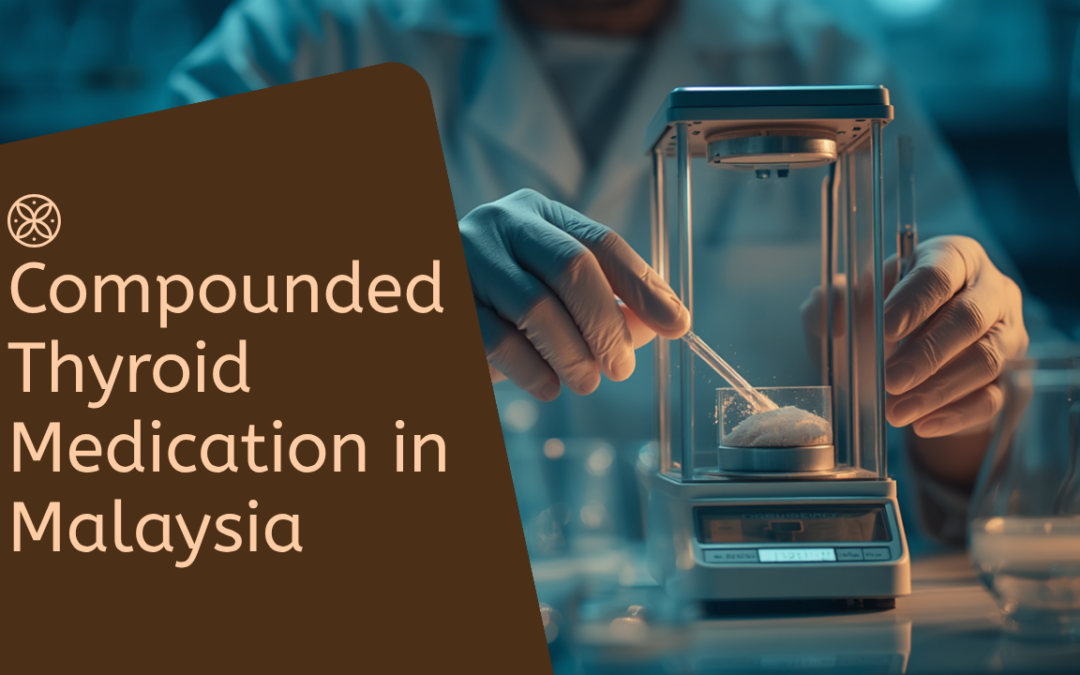
Short answer: Compounded thyroid medication is a thyroid preparation made to order for one patient, in the exact strength and form a doctor prescribes — for example, without a filler or dye the patient reacts to, or at a dose not available as an off-the-shelf product. In Malaysia it is prepared by a compounding pharmacy on the instruction of a registered doctor, and it is always a prescription-only medication.
Most people with an underactive thyroid do well on standard, registered thyroid tablets, and those should usually be the first choice. Compounding is a niche option a doctor may consider in specific situations. This article explains what compounded thyroid medication is, when it comes up, and how the process works for patients in Kuala Lumpur, the Klang Valley and Singapore.
What “compounded thyroid medication” actually means
A compounding pharmacy prepares a medication from individual ingredients to match a specific prescription, rather than dispensing a mass-produced pack. For thyroid support, that can mean preparing a precise strength, leaving out a particular filler or colouring, or making a form that is easier for a patient to take.
It is worth being clear and honest about one thing: a compounded thyroid preparation is custom-made to a prescription and is not the same as a registered, commercially manufactured product that has gone through the standard product-registration pathway. Both have a role. Which is appropriate is a clinical decision your doctor makes.
Why might a doctor consider compounding for thyroid support?
There are a few recurring reasons this option is raised, and reputable pharmacies frames all of them cautiously.
Sensitivities to fillers or additives
Some patients react to ingredients in standard tablets — for instance lactose, gluten, or particular dyes. Compounding can allow a preparation that leaves out a specific problem ingredient, which is one of the most common reasons the topic comes up.
A strength that isn’t commercially available
Standard thyroid tablets come in fixed strengths. Occasionally a doctor wants a dose that sits between the available options, and a compounded preparation can be made to that exact strength.
A form that suits the patient
Where swallowing a tablet is difficult, a doctor may prescribe an alternative form. Any change of form is a clinical decision, not a matter of preference alone.
Across all of these, many patients report feeling more comfortable on a preparation tailored to them — but responses vary from person to person, and compounding is not automatically better than a standard product. Your doctor weighs it up.
How the process works at a compounding pharmacy in KL
The pathway is straightforward and always begins with a doctor:
- Consultation and testing. Thyroid management is guided by blood tests (such as TSH and related markers) that your doctor orders and interprets. Therapy is based on your actual results, not a guess.
- Prescription. If your doctor decides a compounded preparation is appropriate, they write a prescription specifying the ingredient, strength and form.
- Preparation under GCP. The pharmacy prepares the medication under Good Compounding Practice (GCP) standards — Malaysia’s Ministry of Health publishes a Good Compounding Practice guideline that covers documentation, quality checks and a beyond-use date for each preparation.
- Monitoring. Thyroid therapy is reviewed over time, with repeat testing so the doctor can adjust as needed.
A prescription from a registered doctor is required for all compounded medications at Lynnity Compounding Pharmacy.
An honest word on safety and expectations
Compounded medicines are prepared to individual prescriptions and do not carry the same registration as mass-produced products, so quality depends heavily on the pharmacy’s standards. That is exactly why GCP, careful documentation and doctor-led monitoring matter. Be cautious of any provider promising guaranteed results or a fixed timeline — thyroid treatment is individual and takes follow-up. Lynnity, a compounding pharmacy in Kuala Lumpur serving the Klang Valley and Singapore, prepares thyroid formulations only from a valid prescription and under GCP standards.
Frequently asked questions
Can I get compounded thyroid medication without a prescription?
No. It is a prescription-only preparation, made solely on the instruction of a registered doctor after proper assessment.
Is compounded thyroid medication better than my normal tablets?
Not automatically. Standard registered tablets suit most people. Compounding is a specific option for particular situations, and your doctor decides whether it fits you.
Do I still need blood tests?
Yes. Thyroid therapy — compounded or not — is guided by blood tests your doctor orders and reviews over time.
Can a compounding pharmacy remove an ingredient I react to?
In many cases a preparation can be made without a specific filler or dye, if your doctor prescribes it that way. Tell your doctor about any known sensitivities.
Can I switch from my registered tablet to a compounded one myself?
No. Any change should be made by your doctor, who can order the right tests and adjust safely.
Take the next step
If you think a personalised thyroid preparation might be relevant, start with your doctor and a proper assessment. To learn how Lynnity prepares personalised, doctor-prescribed formulations under GCP standards, visit www.lynnity.com or contact our team.
Frequently asked questions
Personalised Medicine Explained: How a Compounding Pharmacy Tailors Your Formulation
Personalised medicine means a medication prepared to fit one patient rather than a one-size-fits-all pack. A compounding pharmacy prepares a formulation in the exact strength, form and ingredient mix a doctor prescribes — always on a registered doctor’s prescription.
Is a Compounding Pharmacy Safe? Understanding Good Compounding Practice (GCP) in Malaysia
A compounding pharmacy is safe when it prepares medications only on a doctor’s prescription and works to recognised quality standards. In Malaysia, that standard is Good Compounding Practice (GCP) — a Ministry of Health guideline covering how compounded preparations are made, checked and documented.